
Lisa Marie Feranna: Nikki Sixx’s Sister (1960-2000)
Published on: November 2, 2026

Written By
Faye Smith

Reviewed By
Richard Dennis
A rock star who filled stadiums spent most of his life not knowing he had a sister. She lived in California, in the same state where he grew up and built his career, in care facilities, while he became famous around the world. He first saw her at her funeral.
She was born in San Jose in 1960 with Down syndrome, blindness and severe hearing loss, and she died there in 2000 at 39. The dates on her memorial record are 12 November 1960 and 28 January 2000. Her brother is Nikki Sixx, co-founder and bassist of Motley Crue, and her story is the story of a family split apart by the medical advice of its time, and of a brother who only learned the full truth decades later.
Lisa Marie Feranna: Quick Biography
She was the younger sister of Nikki Sixx, co-founder and bassist of Motley Crue. She was born with Down syndrome, blindness and severe hearing loss, lived most of her life in institutional care in California, and died in 2000 at 39. Her brother never met her during her lifetime.
Quick Facts
| Born | 12 November 1960, San Jose, California |
|---|---|
| Died | 28 January 2000, San Jose, California, aged 39 |
| Parents | Frank Carlton Serafino Feranna Sr. and Deana Richards |
| Brother | Nikki Sixx, born Frank Carlton Serafino Feranna Jr., 11 December 1958 |
| Half-siblings | Rodney Anthony Feranna (born 1966) and Ceci |
| Conditions | Down syndrome, blindness, severe hearing loss |
| Known for | Younger sister of Nikki Sixx |
| Marital status | Not married |
| Children | None |
| Occupation | None, lived in institutional care |
| Net worth | No figure on the public record |
| Height | Not on the public record |
| Social media | None |
Who Is Lisa Marie Feranna?
She was the younger biological sister of Nikki Sixx, co-founder and bassist of Motley Crue, born on 12 November 1960 in San Jose, California, with Down syndrome, blindness and severe hearing loss. She lived most of her life in institutional care and died on 28 January 2000 at the age of 39, without ever meeting her brother.
People search for her name for one reason. Her brother became one of the most famous rock musicians in the world, and late in his life he began to talk about a sister he had never known: a child separated from her family in 1960, on medical advice that was standard at the time, and a sibling who lived a parallel life in the same state for nearly forty years.
The story is the family, the system that separated them, and what her brother found when he finally went looking. Try My Bio’s profile of Lorelei Frygier follows the same approach for another private family member, as does the profile of Melissa Esplana.
Birth and Early Life in San Jose
She was born on 12 November 1960 in San Jose, California, the second child of Frank Carlton Serafino Feranna Sr. and Deana Richards. Her older brother, Frank Jr., later Nikki Sixx, had been born on 11 December 1958, also in San Jose, so he was just under two years old when she arrived.
The family was young and under strain. Her father came from an Italian-American family, and her mother was 19 when Lisa was born. She was already raising a toddler, money was tight, and the household had little support. Then came the diagnosis: Down syndrome, together with blindness and severe hearing loss, a combination that meant Lisa would need constant care.

Eleven months at home
Doctors in 1960 routinely advised parents of children with Down syndrome to place them in institutions. Her parents brought her home anyway and cared for her there for about eleven months before placing her in a care facility.
Eleven months is a short time, and it matters: she was not surrendered at birth. Her parents tried, with a toddler in the house, two young parents and no support services, and the demands proved more than the household could carry. Shortly after she was placed in care, her father left the family.
Her Family: Parents and Brother
Her family was small, and it broke apart early. Her father left when she was still a baby, and her brother left home as a teenager. Lisa stayed in care in California while all of that happened.
The Family
| Father | Frank Feranna Sr. (Frank Carlton Serafino Feranna Sr.), Italian-American |
|---|---|
| Mother | Deana Richards |
| Brother | Nikki Sixx, born Frank Carlton Serafino Feranna Jr., 11 December 1958, San Jose |
| Half-brother | Rodney Anthony Feranna, born 1966 |
| Half-sister | Ceci |
| Family home | San Jose, California |
| Father left family | Shortly after Lisa was placed in care, around 1961 |
Frank Carlton Serafino Feranna Sr.
Her father was an Italian-American man, and the family was of Italian descent on his side, from Calascibetta, Sicily. He was described as hardworking and proud of being the first in his immigrant family born in the United States and the first to graduate from high school.
Nikki Sixx later said, after researching his family history for his 2021 memoir, that his father had opposed the decision to place Lisa in institutional care, and that the disagreement may have contributed to the end of the marriage.
Deana Richards
Her mother was Deana Richards. She was 19 when Lisa was born, already raising a two-year-old son, with limited financial and emotional support. In the early 1960s, doctors commonly advised parents to institutionalise children born with Down syndrome, telling them it was the best option because society offered almost no community programs or assistance. Deana followed that medical advice after about eleven months of caring for Lisa at home.
Years later, her son said she made the best decision she could under extremely difficult circumstances.
Nikki Sixx, her older brother
Her brother, whose real name was Frank Carlton Serafino Feranna Jr., was born on 11 December 1958 in San Jose. He was two years old when Lisa was born and placed in care, too young to remember her living at home. He grew up without her, and family members later told him that visiting her would upset her, so he never went.
After his father left, Nikki was partially raised by his single mother and by his grandparents. At 17 he moved to Los Angeles, joined the band Sister, then formed London, and legally changed his name to Nikki Sixx. He went on to co-found Motley Crue in 1981 with drummer Tommy Lee, and became the band’s bassist, primary songwriter and only constant member.
He also became addicted to heroin, overdosed on 23 December 1987 and was reportedly declared clinically dead for two minutes before being revived, and declared himself sober in 2004. None of that fame touched his sister’s life.
Born on 11 December 1958, he is 67 in November 2026. He has been married three times, and since 15 March 2014 to Courtney Bingham, known as Courtney Sixx. His children are Gunner Nicholas Sixx, born 25 January 1991, Storm Brieann Sixx, born 14 April 1994, and Decker Nilsson Sixx, born 23 May 1995, with his first wife Brandi Brandt; Frankie-Jean Mary Sixx, born 2 January 2001, with his second wife Donna D’Errico; and Ruby Sixx, born 27 July 2019, with Courtney.
Nikki Sixx also has one half-brother, Rodney Anthony Feranna, born in 1966, and one half-sister, Ceci.
Down Syndrome, Blindness and Hearing Loss
She was born with Down syndrome, and she was blind and had severe hearing loss. That combination of three conditions, and the health challenges they brought, is the central fact of her life, because it decided where she lived and how she was treated.
Down syndrome, in plain terms
Down syndrome occurs when a person has a full or partial extra copy of chromosome 21. The National Down Syndrome Society explains that the additional genetic material alters development and causes the characteristics associated with the condition, including low muscle tone and an upward slant to the eyes. Most people with Down syndrome have cognitive delays that are mild to moderate, and the condition is usually caused by an error in cell division called nondisjunction, which accounts for about 95 percent of cases.
As of 2018, the National Down Syndrome Society estimates that 1 in every 775 babies born in the United States has Down syndrome, about 5,000 babies a year. In 1960, doctors often told parents that children with Down syndrome would not live long or develop basic skills. Those beliefs are now discredited, but they shaped what happened to Lisa.
How long people with Down syndrome lived then and now
Lisa lived to 39, a long life for a person with Down syndrome who had spent decades in institutional care in her era. The change the National Down Syndrome Society records is one of the largest shifts in modern medicine.
Down Syndrome Life Expectancy
| Source | National Down Syndrome Society |
|---|---|
| 1910 | Children with Down syndrome were expected to survive to age nine |
| After antibiotics | Average survival age rose to 19 or 20 |
| Today | As many as 80 percent of adults with Down syndrome reach age 60 |
| How common | About 1 in every 775 live births in the United States, about 5,000 babies a year |
| Main cause | Trisomy 21, nondisjunction, about 95 percent of cases |
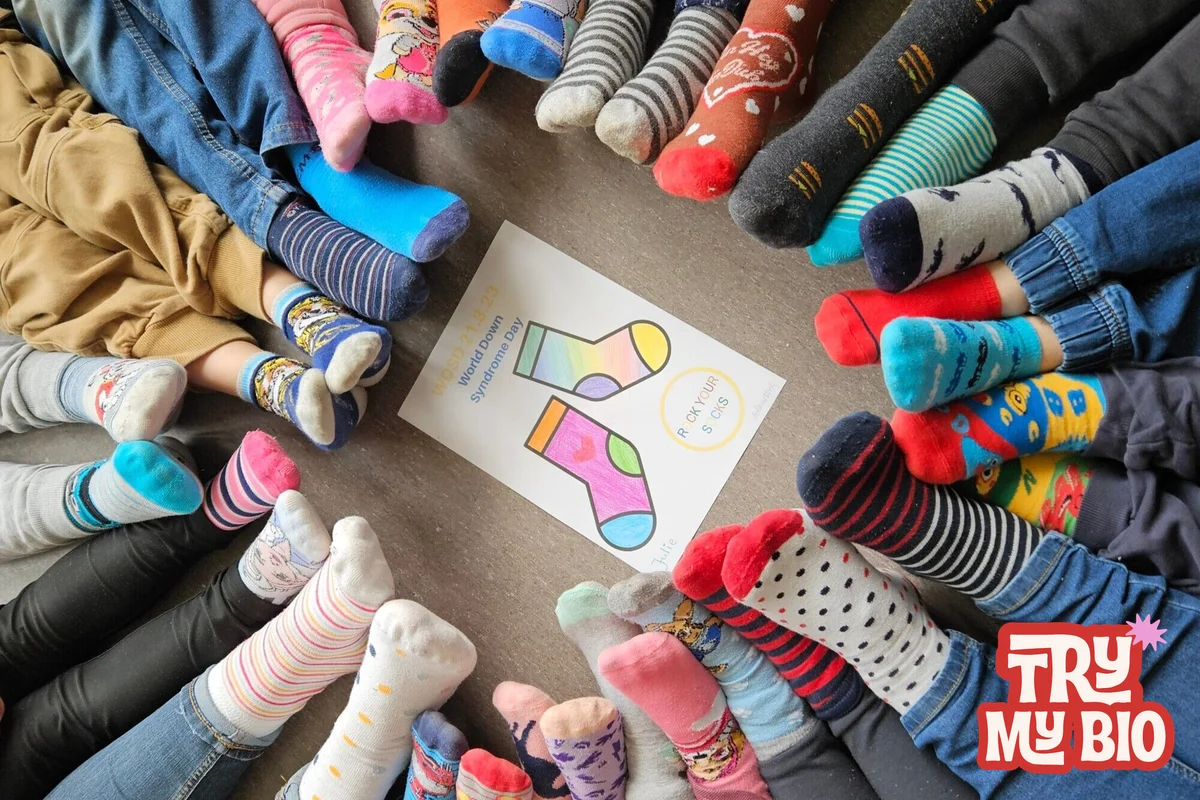
The change happened because medicine improved, corrective heart surgery became available, institutions closed, and people with Down syndrome began to receive medical care, education and community support. Lisa died in 2000, at the edge of that transformation.
Why She Was Placed in Institutional Care
She was placed in institutional care because she was born in 1960 with Down syndrome, blindness and severe hearing loss, when doctors strongly advised parents to send children with such conditions to state facilities. Her parents were very young, had limited financial and emotional support, and there were no community programs or disability assistance available to help a family raise a child with complex needs at home.
The medical advice of 1960
In 1960, the standard medical advice to parents of a child with Down syndrome was to place the child in an institution and move on. Doctors presented it as the best and safest choice, and many parents felt they had no real alternative. The advice rested on beliefs that are now recognised as wrong: that children with Down syndrome could not learn, could not develop basic skills, and would not live long. Parents who resisted got little support, only judgement and isolation from a society that wanted these children hidden away.
The Feranna parents followed the advice after eleven months. That decision is the one fact about Lisa’s life that her brother later returned to again and again, not to blame his parents, but to understand the system that left them with so little choice.
What did not exist yet
Two laws that would have changed everything for Lisa came too late for her. The Individuals with Disabilities Education Act was passed in 1975, guaranteeing children with disabilities the right to a free and appropriate public education. Before it, about one million children with disabilities in the United States were excluded from public schools entirely, and only one in five received a public school education at all. The Americans with Disabilities Act was passed in 1990, and it prohibits discrimination against people with disabilities in everyday activities. Lisa was 15 when the first law passed and 30 when the second did, and she had already spent most of her life in institutional care by then.
The gap between 1960 and those laws is the gap Lisa lived in. The cost of the decision was not only Lisa’s separation from her family. It was also the end of her parents’ marriage, or at least a contributing factor in it, according to her brother’s later research. None of that cost was inevitable. It was the result of specific policies, medical attitudes and cultural beliefs that have since been recognised as cruel and wrong.
A Life Apart: Four Decades Without Her Brother
Lisa Marie Feranna lived through the disability rights movement, the passage of the education and civil rights laws, and her brother’s rise to fame, without ever meeting him. They lived parallel lives for nearly forty years, in the same state, without a single conversation or a shared memory.
While she was in care, her brother’s life took the opposite direction. He left home as a teenager, moved to Los Angeles, changed his name to Nikki Sixx, and co-founded Motley Crue in 1981. As the band rose to international fame, Lisa remained in care facilities, without public recognition, and her brother had no idea what her life looked like.
The distance between them was not geographical. Both were in California for much of their lives. It was created by the institutions, by the advice the family had been given, and by the story Nikki had been told: that visiting her would upset her. He had no memory of her living at home, because he was two when she was placed in care.
Nikki Sixx: Career Timeline
| 1958 | Born Frank Carlton Serafino Feranna Jr., 11 December, San Jose |
|---|---|
| 1960 | Younger sister Lisa born, 12 November, San Jose |
| 1975 | Moved to Los Angeles aged 17, joined the band Sister |
| 1978 | Formed London, legally changed his name to Nikki Sixx |
| 1981 | Co-founded Motley Crue with Tommy Lee |
| 1987 | Heroin overdose, 23 December, declared clinically dead for two minutes |
| 2000 | Sister died, 28 January; first time he saw her, at her funeral |
| 2004 | Declared himself sober |
| 2011 | Published the photo book This Is Gonna Hurt |
| 2014 | Married Courtney Bingham, 15 March |
| 2021 | Published the memoir The First 21 |
Death in 2000, the Funeral, and What Came After
She died on 28 January 2000 in San Jose, California, at the age of 39. Her funeral was the first and only time Nikki Sixx saw her in person. He was 41. For nearly four decades, their lives had run parallel without connection.
Her death received no media coverage at the time. She was not famous, and her connection to Nikki Sixx was not publicly known. The funeral was a private family event, and the detail that matters about it comes from her brother: that it was the first time he saw his sister. The specific cause of her death has not been made public.
This Is Gonna Hurt, 2011
Eleven years after her death, her brother published a photo book, This Is Gonna Hurt, in 2011. While finishing the book, he looked around his photo studio at the props he had collected, wheelchairs, children’s leg braces, old medical equipment, and child mannequins, and he suddenly understood that his creative choices were connected to Lisa. He told Express.com: “Oh my God, this is all about her.”
He had learned of her only when he was in his thirties, and the book became the first public acknowledgement that she had been part of his life all along, unknowingly.
The First 21, 2021
In 2021, Nikki Sixx published his memoir, The First 21: How I Became Nikki Sixx, and explored his childhood, family history, and Lisa’s story in greater depth than ever before. While researching for the book, he discovered details he had not known, including his father’s reported resistance to institutionalising Lisa.
Rather than blaming either parent, he expressed empathy for the difficult circumstances they faced, recognising that the medical system offered them little hope or assistance. The memoir is the fullest account of her story that exists, and it is her brother’s account, built from research and reflection twenty-one years after her death. The memoir’s tone toward his mother is one of empathy rather than blame.
Net Worth, Height and the Public Record
She had no publicly recorded net worth, no publicly documented height, and no public career. That is the direct answer to the three questions people most often ask about her. She did not work, run a business, or live a public life. She spent most of her life in institutional care because of her health conditions, and she depended on the care system for her daily needs.
There are no public records showing that she owned property, had income, or managed financial assets. Any figure published under her name is either invented or is her brother’s wealth relabelled.
Her height was never publicly documented, and no verified photograph of her is in public circulation. Her burial place is also not on the public record. Her memorial is listed on Find A Grave, Memorial ID 247188446.
FAQs
Who was she?
Lisa Marie Feranna was the younger sister of Nikki Sixx, co-founder and bassist of Motley Crue. She was born on 12 November 1960 in San Jose, California, with Down syndrome, blindness, and severe hearing loss, lived most of her life in institutional care, and died on 28 January 2000 at the age of 39.
How old was she when she died?
She was 39. She was born on 12 November 1960 and passed away on 28 January 2000, both in San Jose, California.
What conditions did she have?
She was born with Down syndrome, and she was blind and had severe hearing loss.
Did Nikki Sixx ever meet his sister?
No. He first saw her at her funeral in 2000. He was two when she was placed in care, had no memory of her living at home, and was told visiting her would upset her.
Why was she placed in institutional care?
Because she was born in 1960 with Down syndrome, blindness, and severe hearing loss, at a time when doctors routinely advised parents to place children with such conditions in state facilities. Her parents were very young, had limited support, and there were no community programs, special education services, or disability assistance available. The Individuals with Disabilities Education Act did not pass until 1975, and the Americans with Disabilities Act did not pass until 1990.
What was her net worth?
No figure was ever publicly recorded. She did not work, run a business, or own property on the public record, and she depended on the care system for her daily needs. Any figure published under her name is invented or is her brother’s wealth relabelled.
How tall was she?
Her height was never publicly documented, and no verified photograph of her is in public circulation. Claims about her height or appearance on profile pages have no source behind them.
What did Nikki Sixx say about her in The First 21?
In his 2021 memoir, he wrote about his father’s reported resistance to placing Lisa in care, the possibility that her placement contributed to his parents’ separation, and his empathy for his mother, who was 19 and had made the best decision she could.
Where is she buried?
Her burial place is not on the public record. Her memorial is listed on Find A Grave, Memorial ID 247188446, but no cemetery name or plot is given.
Why does her story matter?
Because it shows what happened to thousands of children with Down syndrome in the 1960s, when doctors advised institutionalisation, families had almost no support, and disability rights laws did not yet exist. It also shows the human cost inside a famous family: a brother and sister who lived parallel lives in the same state for nearly forty years and never met.